
How to Use Breathing Techniques for Panic Attacks: 7 Practical Ways to Regain Control


November 2026
A panic attack can be frightening and overwhelming. Your heart may race, your chest may feel tight, your breathing may become rapid and shallow, and you might experience dizziness or an intense fear that something terrible is about to happen.
Although these sensations can feel alarming, they can be associated with the body's fight-or-flight response. Breathing techniques for panic attacks may help you manage some of these physical sensations, establish a steadier breathing rhythm and regain a sense of control.
However, breathing exercises are not a guaranteed way to stop a panic attack. They are best understood as practical coping strategies that may complement professional treatment when panic attacks become recurrent.
The key is to breathe gently rather than forcefully. Trying to take excessively deep breaths, holding your breath or concentrating too intensely on every breath can sometimes increase discomfort.
This guide explores seven practical breathing and grounding techniques, explains how to practise them safely and discusses when professional support may be beneficial.
Quick Summary
Breathing techniques can help some people manage the physical symptoms associated with panic attacks by encouraging slower, more regular breathing. They are useful self-management strategies, but they are not a substitute for evidence-based treatment of panic disorder.
Try gentle, paced breathing using a comfortable inhalation and slightly longer exhalation.
Avoid forcing deep breaths or holding your breath if this increases discomfort.
Practise regularly when you are calm so the technique becomes familiar.
Combine breathing with grounding exercises to redirect attention towards your surroundings.
If focusing on your breathing increases anxiety, switch to an external grounding technique.
Seek medical assessment for new, severe or unusual physical symptoms rather than automatically assuming they are caused by panic.
Consider professional support if panic attacks are recurring or affecting your everyday life.
Table of Contents
Understanding Why Breathing Changes During a Panic Attack
How to Breathe During a Panic Attack
Seven Breathing and Grounding Techniques for Panic Attacks
How Long Should You Practise Breathing Exercises?
What to Do When Breathing Exercises Make Panic Worse
Common Mistakes to Avoid
Building a Daily Breathing Practice
When to Seek Professional Support
Frequently Asked Questions
1. Understanding Why Breathing Changes During a Panic Attack
A panic attack involves an abrupt surge of intense fear or discomfort that typically reaches its peak within minutes.
It activates the body's threat-response system, preparing you to respond to perceived danger. Your heart rate may increase, muscles may become tense and breathing may become faster.
These changes can happen even when there is no immediate physical threat.
Common symptoms include:
Rapid or shallow breathing.
A racing or pounding heartbeat.
Chest tightness or discomfort.
Dizziness or light-headedness.
Sweating or trembling.
Tingling sensations in the hands or face.
Feelings of unreality or detachment.
Fear of losing control, fainting or dying.
One important factor is hyperventilation, which occurs when someone breathes more than their body requires at that moment.
Over-breathing can lower carbon dioxide levels in the blood, contributing to dizziness, tingling and other uncomfortable physical sensations.
These sensations can then increase fear, creating a cycle in which anxiety and changes in breathing reinforce one another.
This is one reason why learning to establish a comfortable breathing rhythm may be helpful.
However, it is important not to assume that every episode of rapid breathing or breathlessness is caused by anxiety. Respiratory, cardiovascular and other medical conditions can produce similar symptoms. The Australian and New Zealand Committee on Resuscitation (ANZCOR) specifically warns against overlooking potentially serious causes of abnormal breathing.
2. How to Breathe During a Panic Attack
When panic begins, you may instinctively try to take several large breaths to get more air.
However, repeatedly taking deep or rapid breaths can sometimes worsen symptoms associated with over-breathing.
A more appropriate starting point is to slow your breathing gently without forcing it.
A Simple Paced Breathing Exercise
Try the following routine if focusing on your breathing feels comfortable.
Step 1: Find a comfortable position
Sit somewhere safe and place both feet on the floor. Relax your shoulders and loosen any restrictive clothing.
Step 2: Breathe in gently
Breathe in through your nose for approximately three seconds, if comfortable.
Step 3: Breathe out slowly
Allow the air to leave naturally through your nose or gently pursed lips. Aim for an exhalation that is slightly longer than the inhalation.
Step 4: Continue at a comfortable pace
Repeat the pattern for approximately one minute, then assess how you feel.
Step 5: Return to natural breathing
If you become dizzy, uncomfortable or more anxious, stop counting and allow your breathing to return to its natural rhythm.
The precise timing is not important. The objective is comfortable, regular breathing rather than achieving a particular number of seconds.
Some people find a slightly longer exhalation helpful. Others prefer equal-length breaths.
Choose the approach that feels manageable rather than forcing yourself to follow a rigid pattern.
3. Seven Breathing and Grounding Techniques for Panic Attacks
Different techniques suit different people. The following exercises provide several options, although not every technique needs to be used during an intense panic attack.
Technique 1: Gentle Paced Breathing
Paced breathing involves slowing your breathing to a comfortable, consistent rhythm.
It can be useful when you notice your breathing becoming rapid or shallow.
How to practise:
Sit comfortably and relax your shoulders.
Breathe in gently for approximately three seconds.
Breathe out for approximately three or four seconds.
Continue for one or two minutes.
Return to natural breathing when comfortable.
The objective is to establish a steady rhythm, not to take unusually deep breaths.
Technique 2: Longer Exhalation Breathing
Some people find it helpful to make their out-breath slightly longer than their in-breath.
This encourages a slower breathing pattern and provides a simple point of concentration.
How to practise:
Breathe in gently for three seconds.
Breathe out slowly for four or five seconds.
Avoid holding your breath between cycles.
Repeat for several comfortable rounds.
If extending your exhalation feels uncomfortable, return to equal-length breaths.
Do not force the technique or attempt to empty your lungs completely.
Technique 3: Diaphragmatic Breathing
Diaphragmatic breathing, sometimes called belly breathing, involves allowing the diaphragm to move naturally as you breathe.
It can help you become more aware of unnecessary tension and overly rapid breathing.
How to practise:
Sit comfortably or lie down.
Place one hand gently on your upper chest and the other on your abdomen.
Breathe in gently and notice your abdomen moving naturally.
Allow your shoulders and upper chest to remain relatively relaxed.
Breathe out without pushing or forcing the air out.
Practise for a few minutes when you feel comfortable.
The aim is natural, relaxed breathing rather than exaggerated abdominal movement.
Technique 4: Pursed-Lip Breathing
Pursed-lip breathing involves breathing out through lips held gently as though you were blowing on a hot drink.
It can help some people slow their breathing and make their exhalation feel more controlled.
How to practise:
Relax your jaw and shoulders.
Breathe in gently through your nose.
Bring your lips together loosely.
Breathe out slowly through the small opening between your lips.
Repeat without forcing the breath.
If this feels uncomfortable, return to your natural breathing pattern.
Technique 5: Box Breathing
Box breathing is a structured exercise involving four stages of equal duration:
Inhale.
Hold gently.
Exhale.
Pause before the next inhalation.
For someone who is already comfortable with breath-holding, each stage might last approximately three or four seconds.
However, box breathing is optional and is not necessarily appropriate during an intense panic attack.
Holding your breath can increase discomfort for some people, particularly when they already feel breathless.
If pauses make you feel anxious, leave them out and use gentle paced breathing instead.
There is no need to complete all four stages to benefit from a slower, more comfortable breathing pattern.
Technique 6: The 5-4-3-2-1 Grounding Technique
Grounding exercises redirect attention away from uncomfortable physical sensations and towards the immediate environment.
The 5-4-3-2-1 technique is particularly useful when concentrating on breathing feels overwhelming.
Identify:
5 things you can see: Notice colours, shapes and objects around you.
4 things you can feel: Notice your feet on the floor or your hands resting on your legs.
3 things you can hear: Listen for nearby and distant sounds.
2 things you can smell: Identify familiar scents.
1 thing you can taste: Notice a taste in your mouth or take a sip of water if appropriate.
There is no need to complete the exercise perfectly.
The purpose is to reconnect with your surroundings rather than remain focused on frightening physical sensations.
Technique 7: Mindful Breathing
Mindful breathing involves noticing the natural movement of your breath without trying to control it.
Rather than concentrating on exact timings, simply observe the sensation of breathing.
How to practise:
Sit somewhere comfortable.
Notice the sensation of air entering and leaving your body.
Allow your breathing to remain natural.
If thoughts arise, acknowledge them without judging yourself.
Gently return your attention to the present moment.
Mindful breathing may be more suitable as a regular relaxation practice than as an immediate response to severe panic.
If focusing on bodily sensations increases anxiety, switch to an external grounding exercise.
4. How Long Should You Practise Breathing Exercises?
There is no single ideal duration for everyone.
For many people, practising for a few minutes regularly is more manageable than attempting lengthy sessions.
A practical starting point is:
During everyday life: Practise for two to five minutes when you feel relatively calm.
During mild anxiety: Try a few rounds of comfortable paced breathing.
During a panic attack: Start with approximately 30 to 60 seconds, then assess whether the technique is helping. Continue only if it feels comfortable.
As your confidence improves: Gradually extend your practice if you find it beneficial.
The Centre for Clinical Interventions in Western Australia recommends regular breathing retraining practice when people are calm, rather than relying exclusively on the technique during periods of anxiety.
Consistency can help you become familiar with the exercise before you need it.
Importantly, breathing techniques are coping strategies rather than a cure for panic disorder. They may help you manage physical symptoms, but they do not necessarily prevent future attacks.
A useful measure of progress is whether you become more comfortable responding to anxiety, even if the symptoms do not disappear immediately.
5. What to Do When Breathing Exercises Make Panic Worse
Although breathing exercises help some people, they are not suitable for everyone.
For some individuals, concentrating on breathing can increase awareness of chest tightness, heart rate or sensations of breathlessness.
This can intensify anxiety rather than reduce it.
If this happens, do not assume you are doing something incorrectly.
Instead, try these alternatives.
Focus on an object: Choose something nearby and describe its colour, shape, texture and other features.
Use physical grounding: Place your feet firmly on the floor and notice the support beneath you.
Listen to familiar sounds: Concentrate on music, conversation or ordinary environmental sounds.
Hold a comfortable object: Notice its weight, temperature and texture.
Use reassuring self-talk: Remind yourself that you can take things one moment at a time.
For example:
"I am experiencing uncomfortable sensations. I can focus on my surroundings and take things one moment at a time."
There is no requirement to use breathing exercises if they make you feel worse.
6. Common Mistakes to Avoid
Breathing exercises are relatively straightforward, but several mistakes can make them less helpful.
Taking excessively deep breaths
Trying to fill your lungs completely with every breath can encourage over-breathing.
Aim for gentle, natural breathing rather than large inhalations.
Forcing a particular breathing rhythm
A three-second inhale and four-second exhale will not suit everyone.
Choose a rhythm that feels comfortable and adjust it when necessary.
Holding your breath for too long
Extended breath-holding can increase discomfort, particularly when you are already feeling breathless.
Breath-holding is not necessary for effective paced breathing.
Expecting immediate results
Breathing techniques are not guaranteed to stop panic attacks.
They are skills that may help you respond differently to uncomfortable sensations.
Practising only during a crisis
Learning a technique during an intense panic attack can be difficult.
Practising when calm helps you become familiar with the routine before you need it.
Using a paper bag to manage hyperventilation
Breathing into a paper bag is not recommended.
ANZCOR strongly advises against rebreathing techniques because they can cause dangerously low oxygen levels and may be harmful.
If someone is breathing rapidly, offer calm reassurance, monitor their condition and seek appropriate medical assessment when necessary.
Assuming all physical symptoms are caused by anxiety
Not every episode of breathlessness, chest discomfort or racing heartbeat is caused by panic.
New, severe or unusual symptoms should be medically assessed rather than automatically attributed to anxiety.
7. Building a Daily Breathing Practice
Developing a regular breathing practice can make it easier to use these techniques when stress increases.
You do not need a complicated routine.
Consider incorporating the following habits.
Practise at a consistent time: Try a few minutes in the morning or before bed.
Connect breathing with an existing habit: Practise after brushing your teeth or before sitting down to work.
Choose a comfortable environment: Find somewhere you can practise without feeling rushed.
Keep expectations realistic: The objective is to develop familiarity, not eliminate every anxious thought.
Notice what works: Some people prefer paced breathing, while others find grounding or mindfulness more useful.
You can also support your general wellbeing through regular physical activity, adequate sleep and reducing excessive caffeine consumption if it contributes to anxiety.
Small, sustainable habits can become part of a broader approach to managing stress and emotional wellbeing.
8. When to Seek Professional Support
Breathing techniques can be helpful, but recurring panic attacks may require more comprehensive support.
Consider speaking with your GP or an appropriately qualified mental health professional if:
Panic attacks are happening repeatedly.
You are constantly worried about experiencing another attack.
You avoid driving, travelling, shopping or social activities because of panic.
Anxiety is affecting your work, relationships or sleep.
You feel unable to manage everyday responsibilities.
Self-help techniques are not providing sufficient relief.
Why Cognitive Behavioural Therapy Can Help
Cognitive behavioural therapy (CBT) is an established psychological treatment for panic disorder.
The Royal Australian and New Zealand College of Psychiatrists (RANZCP) clinical practice guidelines identify CBT as an evidence-based treatment option for panic disorder.
Unlike breathing exercises, which primarily provide a practical way to manage some immediate physical sensations, CBT addresses the thoughts, behaviours and patterns that can maintain recurring panic.
CBT may involve several components.
Understanding panic: Learning about the fight-or-flight response and how physical sensations, thoughts and behaviours interact.
Identifying catastrophic thinking: Recognising interpretations such as believing that a racing heart necessarily means a heart attack or that dizziness means you will faint.
Changing unhelpful thinking patterns: Developing more balanced and realistic interpretations of physical sensations.
Gradual exposure: Working with a trained professional to gradually approach feared physical sensations or situations rather than continually avoiding them.
Reducing avoidance and safety behaviours: Understanding how constantly escaping situations or relying on protective behaviours can maintain fear over time.
Developing relapse-prevention strategies: Learning how to respond if panic symptoms return.
These approaches can help people become less fearful of the physical sensations associated with panic and gradually regain confidence in everyday activities.
The Australian Psychological Society also identifies CBT as having the strongest research evidence among psychological treatments for panic disorder.
For some people, medication may also be considered following an appropriate medical assessment. Treatment decisions depend on symptom severity, individual circumstances, preferences and clinical advice.
How Breathing Exercises Fit Into Treatment
Breathing retraining may be included as one component of a broader approach to managing anxiety.
However, it is important not to overstate its role.
Breathing exercises are not essential to every CBT programme, and the evidence does not establish that breathing retraining alone is an adequate treatment for panic disorder.
Their value is primarily as a practical coping skill that some people find helpful alongside appropriate psychological treatment.
If panic attacks are affecting your quality of life, a personalised treatment approach is generally more appropriate than relying on breathing exercises alone.
Important Medical Safety Advice
Panic attacks can produce symptoms that resemble medical emergencies.
However, serious medical conditions can also cause rapid breathing, chest discomfort and breathlessness.
If you experience new, severe or unexplained symptoms, seek medical assessment rather than assuming they are caused by panic.
If you suspect a medical emergency, call Triple Zero (000) immediately.
ANZCOR recommends that people with abnormal or rapid breathing receive appropriate assessment and that an ambulance be called if there is doubt about whether the symptoms are caused by panic or another medical problem.
For non-emergency health advice in Australia, you can contact healthdirect on 1800 022 222.
9. Frequently Asked Questions
What is the best breathing technique for a panic attack?
There is no single best technique for everyone. Gentle paced breathing, diaphragmatic breathing and slightly longer exhalations may help some people manage physical anxiety symptoms.
Start with a comfortable rhythm rather than forcing a specific breathing pattern. If focusing on your breathing increases anxiety, try an external grounding technique instead.
How do I calm down quickly during a panic attack?
Find a safe, comfortable position and allow your breathing to become slower and more regular without forcing it.
You can also try grounding by identifying objects, sounds and physical sensations around you.
A panic attack typically reaches its peak within minutes, although some symptoms may last longer. Remember that you do not have to force yourself to feel calm immediately.
Can breathing exercises stop a panic attack?
Breathing exercises may help reduce the intensity of some physical symptoms and make an attack easier to manage.
However, they cannot guarantee that a panic attack will stop or prevent future attacks. Recurring panic symptoms may benefit from professional treatment, particularly CBT.
Why does focusing on my breathing sometimes make anxiety worse?
Paying close attention to breathing can increase awareness of sensations such as chest tightness, breathlessness and changes in heart rate.
For some people, this increases fear and makes panic feel more intense.
If this happens, stop counting breaths and use external grounding techniques instead.
How often should I practise breathing exercises for anxiety?
You can begin with two to five minutes once a day when you feel relatively calm.
If you find the exercise helpful, you can practise more frequently. Regular, comfortable practice is generally more sustainable than lengthy sessions.
Should I breathe into a paper bag during a panic attack?
No. Paper-bag breathing is not recommended.
ANZCOR advises against rebreathing techniques because they can dangerously reduce oxygen levels. Gentle, regular breathing and appropriate medical assessment are safer approaches.
Take the First Step Towards Managing Anxiety
Panic attacks can be frightening, particularly when physical sensations seem overwhelming or unpredictable.
Learning to respond to these sensations with greater awareness and confidence can be an important part of managing anxiety.
Breathing exercises, grounding techniques and practical coping strategies may help you feel more equipped to manage difficult moments. However, you do not need to manage recurring panic attacks alone.
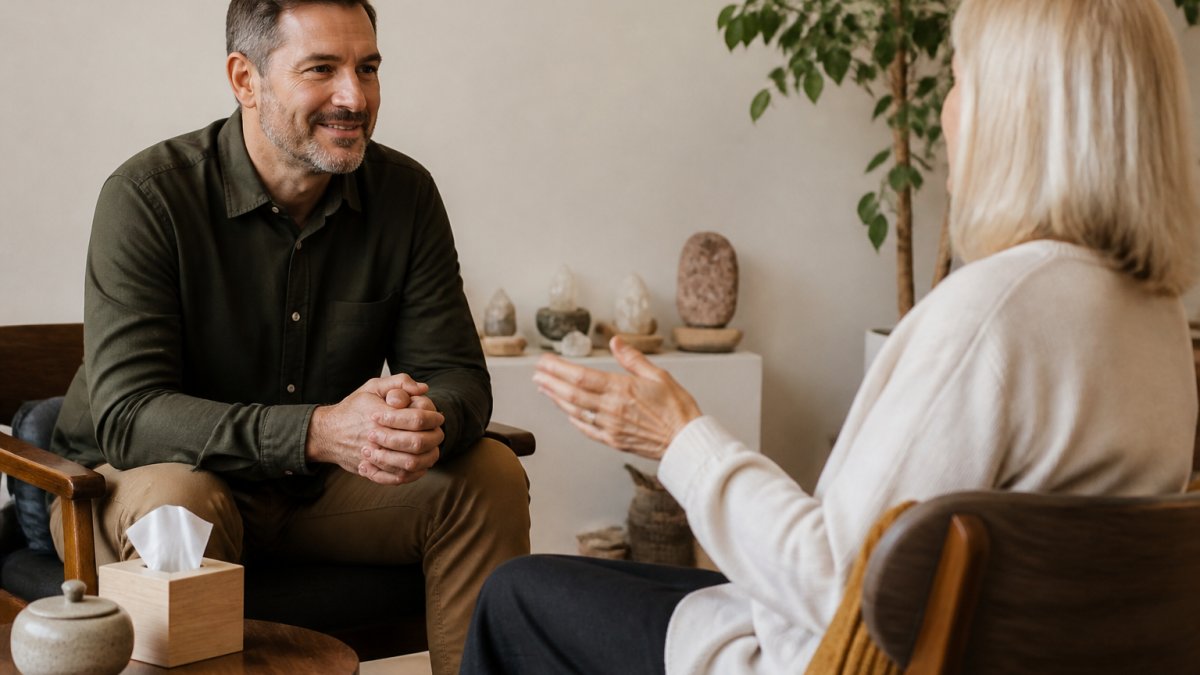
At The Lotus Rooms, we recognise that anxiety and panic can affect people in different ways. Our counselling approach is individualised and may draw on cognitive behavioural therapy (CBT), solution-focused principles, NLP and hypnotherapy where appropriate.
We aim to provide a supportive environment in which you can explore your concerns, understand unhelpful patterns and develop practical strategies for improving your emotional wellbeing.
Sessions are available face to face and by video.
If anxiety or recurring panic attacks are affecting your quality of life, professional support may help you identify an appropriate way forward.
References and Further Reading
The following Australian clinical resources and professional guidelines support the information in this article.
Australian and New Zealand Committee on Resuscitation (ANZCOR). (2026). Guideline 9.2.8: First Aid Management of Rapid Breathing (including Panic Attack).https://www.anzcor.org/home/first-aid/guideline-9-2-8-first-aid-management-of-rapid-breathing-including-panic-attack
Andrews, G., Bell, C., Boyce, P., et al. (2018). Royal Australian and New Zealand College of Psychiatrists clinical practice guidelines for the treatment of panic disorder, social anxiety disorder and generalised anxiety disorder. Australian & New Zealand Journal of Psychiatry, 52(12), 1109–1172.https://doi.org/10.1177/0004867418799453
Australian Psychological Society (APS). Panic disorder: Treatment and psychological support.https://psychology.org.au/for-the-public/psychology-topics/panic-disorder
Centre for Clinical Interventions, Government of Western Australia. Breathing Retraining: Panic Information Sheet 4. https://www.cci.health.wa.gov.au/~/media/CCI/Mental%20Health%20Professionals/Panic/Panic%20-%20Information%20Sheets/Panic%20Information%20Sheet%20-%2004%20-%20Breathing%20Retraining.pdf
American Psychiatric Association. Practice Guideline for the Treatment of Patients With Panic Disorder, Second Edition. https://psychiatryonline.org/pb/assets/raw/sitewide/practice_guidelines/guidelines/panicdisorder.pdf
Healthdirect Australia. Panic attacks and panic disorder. https://www.healthdirect.gov.au/conditions/mental-health-conditions/panic-attacks-and-panic-disorder
Healthdirect Australia. Anxiety.https://www.healthdirect.gov.au/symptoms/anxiety
This article provides general educational information and is not a substitute for individual medical assessment, diagnosis or treatment.



Comments